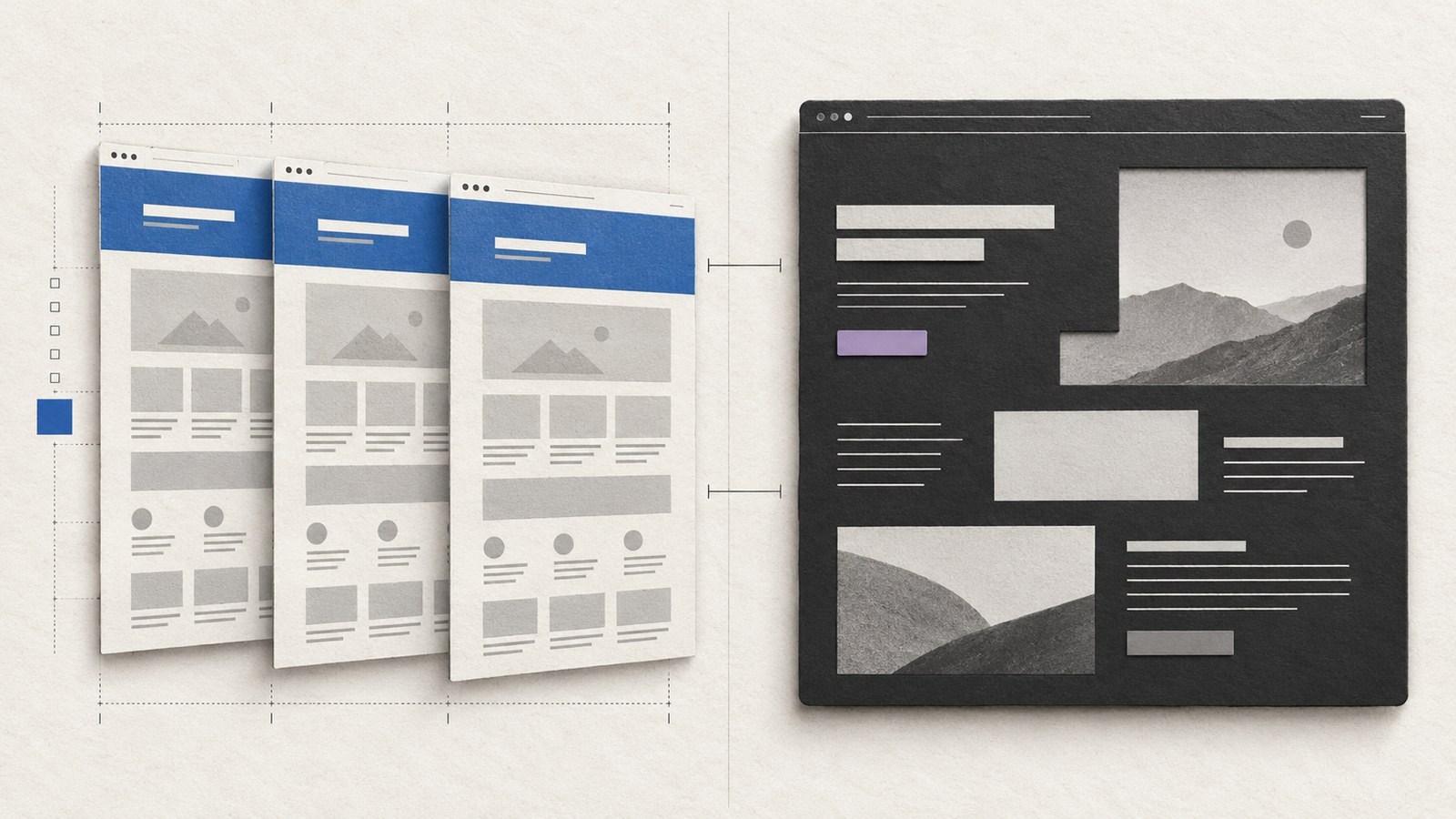
A landing page should help someone decide whether the offer fits their need and what to do next. It cannot guarantee a sale or enquiry, because the result also depends on the audience, offer, price and traffic source.
Start with one sentence: “This page is for this visitor, who wants this outcome, and the next action is this.” If the sentence is vague, the page will probably be vague too.
Match the promise that brought the visitor
If an advert offers a consultation about website maintenance, the destination should explain that consultation. Sending the visitor to a broad page about every service makes them repeat the work of finding the relevant offer.
Use a specific headline, a short explanation and a clear action. Avoid making the reader decode a clever phrase before understanding what is available. Name the problem and the useful outcome in language the customer recognizes.
For example, “Get a plan for repairing your WordPress website” is more actionable than a general statement about digital transformation, provided the actual service delivers that plan.
Give the reader the information needed to decide
Useful sections depend on the offer. A service landing page may need scope, who it suits, how the work happens, relevant examples and common questions. A product page needs a different set of answers.
Do not copy a standard sequence of three benefit cards into every page. List the questions a prospective customer would ask, then put the most important answers in a sensible order.
Explain boundaries as well as benefits. If a maintenance service covers updates but a redesign is separately scoped, that distinction prevents a misunderstanding later.
Use evidence you can support
Show actual work, a clear process or an approved testimonial with a legitimate source. Identify templates and concepts accurately. A design example can demonstrate a visual approach without pretending to be a client success story.
Avoid fabricated ratings, implied certifications and unsupported percentages. If quantitative outcomes are unavailable, describe what was built and why. Honest specificity is stronger than impressive numbers nobody can verify.
The KEYDIV work page distinguishes available template work and its design purpose. Use examples that fit the offer instead of adding unrelated logos for decoration.
Make the action understandable and usable
Choose a primary next step that matches the visitor’s readiness: request a quote, ask a question or discuss a project. A button label should describe that action rather than simply saying “submit.”
Put enough context near the form to explain what happens next. Ask for the information needed to handle the request. A long form is justified only if its extra answers genuinely improve that next step.
Test keyboard navigation, visible labels, validation and the success state. On mobile, check that the form does not force horizontal scrolling and that controls remain comfortable to use. Do not let a sticky call to action cover the actual fields.
Keep the page fast and readable
Meaningful imagery can clarify an offer, but large assets and unnecessary scripts can delay the headline or form. Use stable image dimensions and give motion a readable fallback.
Check text contrast and line length. A page can look spacious in a screenshot while being tiring to read on a phone. The website performance guide provides practical checks for delivery and interaction.
Measure the whole path
Where approved analytics exist, define the events that matter: a relevant visit, action selection, form start and accepted enquiry. Check that duplicate clicks do not inflate the apparent result.
Combine the numbers with customer feedback. A low enquiry count might reflect the wrong audience or an unclear offer; changing button colors alone will not diagnose it. Test one meaningful hypothesis at a time and treat small samples carefully.
If your offer fits a reusable structure, explore KEYDIV landing page templates. For a more specific journey, website design and development can shape the page around it. Share the audience, offer and desired action to begin with the decision the page needs to support.