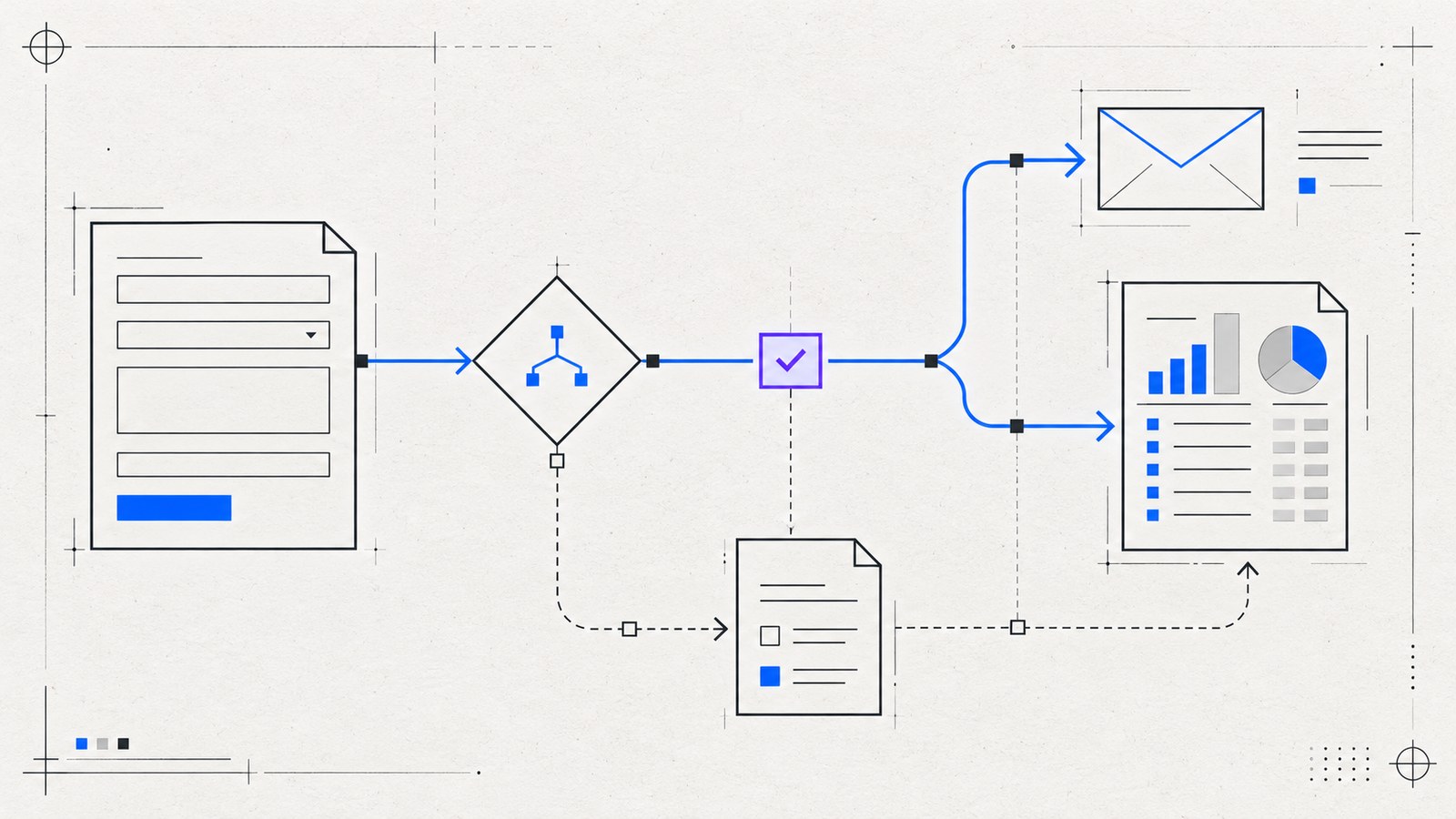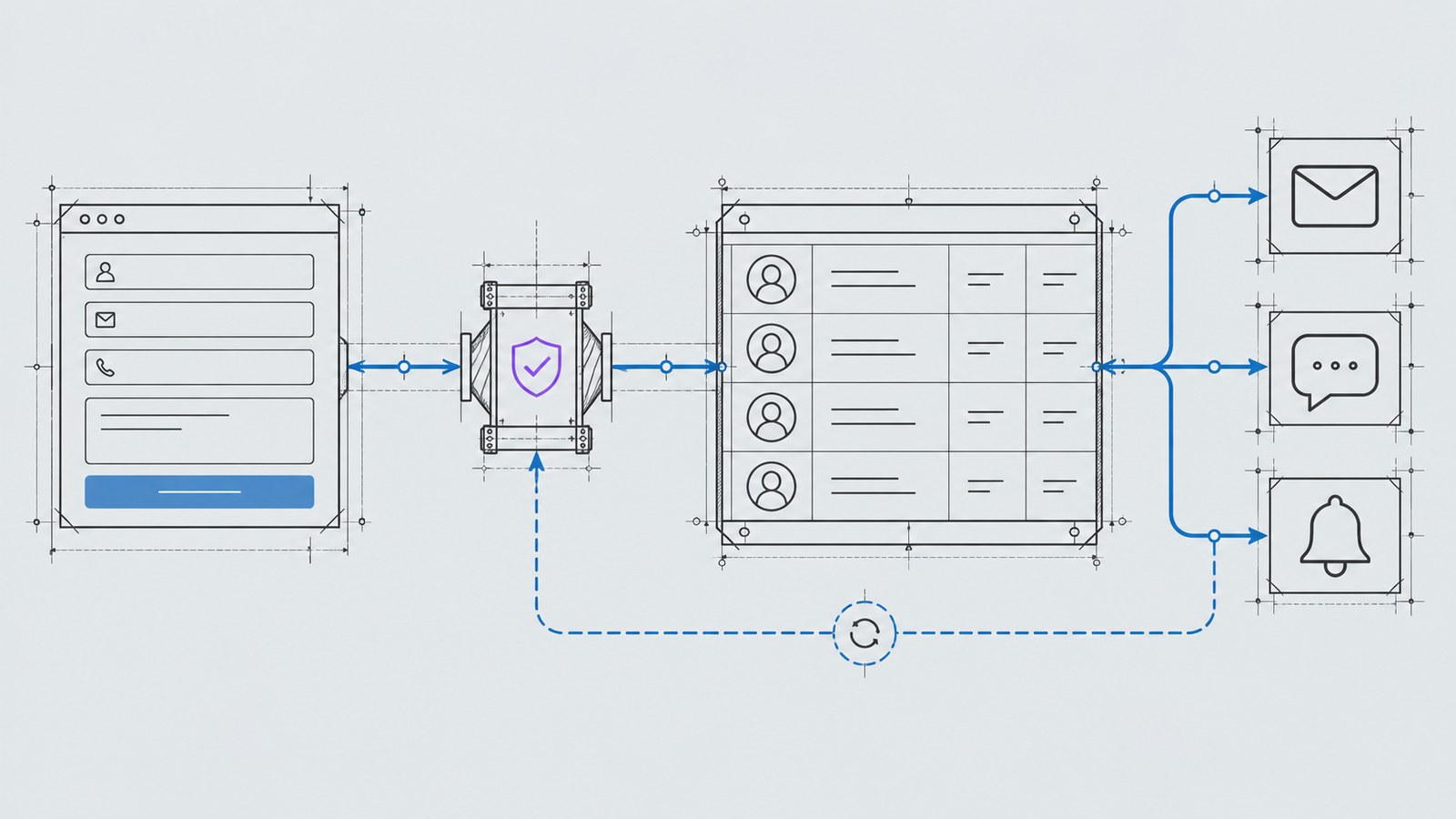
A contact form can show a success message while the business still lacks a usable lead. The CRM may reject a field, the notification may fail or the record may have no owner. Lead routing needs to define the whole path, including its exceptions.
A practical sequence is: collect the enquiry, validate it, accept it reliably, create or update the business record, assign an owner and notify the relevant person. Each step needs an observable result.
Define a stable form contract
Use consistent fields for contact details, service and message. Give each logical form a stable source identifier so the recipient can distinguish a maintenance enquiry from a store-development enquiry.
Document which fields are required, their allowed lengths and the CRM mapping. A field called “project type” in the website and “service interest” in the CRM can be fine, provided the mapping is explicit and tested.
Keep optional tracking context separate from the customer’s message. Never let a query parameter decide the private destination of the lead.
Validate at the trusted boundary
Browser validation helps the visitor correct mistakes. The server must also check requests before accepting or forwarding them. Include the method, content type, size, expected field names and value types in that check.
OWASP’s input validation guidance recommends validating early and on the server, using allowed values and appropriate checks. Validation should reject an unexpected service code rather than interpreting it as a destination or command.
Render messages safely in dashboards and notifications. Customer text is data, not HTML or instructions. Keep integration credentials and private endpoints in trusted server-side configuration.
Separate acceptance from later delivery
Decide what the form’s success response means. It could mean the lead was stored durably for processing, or that a downstream service accepted it. If processing is queued, do not imply every later notification has already arrived.
Use an internal reference to trace the lead through the workflow. Record useful state transitions without logging secrets or unnecessary personal data. The visitor does not need a technical status dump, but the support owner needs a way to investigate.
Assign a default owner
Route known services to defined owners or queues. Give missing or ambiguous context a review route. Maintain those rules as the team changes, rather than hardcoding an individual inbox in several unrelated places.
Plan duplicate handling and retries
People can tap twice and integrations can retry. Choose how to distinguish a duplicate event from a genuinely new enquiry. Do not merge every lead with the same email address, because a returning customer may have a different project.
An idempotency key can identify a particular submission so retrying it does not create repeated records. AWS’s explanation of idempotent APIs describes why retries need a defined identity and consistent behavior.
Use bounded retries for temporary failures. Permanent validation or authorization failures need review instead of endless repetition. Keep failed events recoverable and alert the owner when automatic recovery is exhausted.
Make notifications useful and restrained
Send the assigned person a clear subject, the service, essential contact context and a link to the authoritative record. Avoid copying the complete message into every channel when a protected CRM link will do.
Email or an appropriate approved messaging channel can notify the team. Confirm the account owner, recipient and purpose before connecting it. A notification is a signal to act, not the long-term record of the enquiry.
For the customer-facing part, see keeping the human touch.
Test the unhappy paths before launch
Use controlled data to test missing fields, oversize messages, duplicate events, CRM downtime and notification failure. Verify the recorded state and recovery route. Do not test only the successful submission.
Define who checks the failure queue and how a rule change is deployed. KEYDIV’s automation service can scope this workflow around your website and existing systems. Share the form, destination and current failure point so the implementation has a concrete starting contract.